

How to Scan Your Scannable IDs

In an increasingly digital world, the ability to verify identity quickly and accurately is paramount. From opening a bank account online to verifying your age for a delivery, the humble driver’s license—the most common form of scannable ID in the United States—has evolved from a simple laminated card into a sophisticated data carrier. While the front of the license with your photo and information is designed for human review, the real magic, and the key to machine verification, lies on the back: the barcode. For anyone looking to understand how this process works, whether for business integration or personal curiosity, the journey begins with understanding this barcode and the ecosystem built around reading it.

The Heart of the Matter: The PDF417 Barcode

Turn over your U.S. driver’s license or state ID card, and you will almost certainly find a two-dimensional barcode, often taking up a significant portion of the card. This is not a standard QR code (which is a matrix barcode) but is most likely a PDF417 code.

PDF417 (Portable Data File 417) is a stacked linear barcode symbology. Developed by Dr. Ynjium P. Wang at Symbol Technologies in 1991, it is designed to hold a substantial amount of data—much more than a traditional 1D barcode like those on grocery products. A single PDF417 symbol can store over 1.1 kilobytes of machine-readable data. This capacity is crucial because it allows the barcode to contain all the visible information on the front of the ID (name, address, date of birth, etc.), along with hidden security data and digital signatures that are not visible to the human eye.

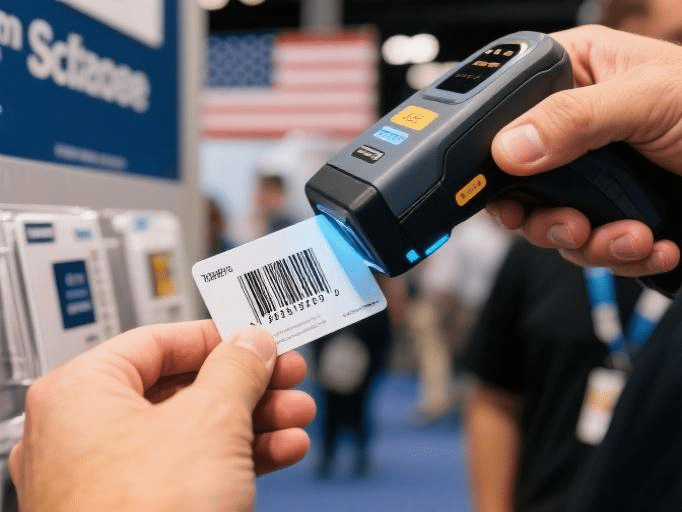
This barcode is the linchpin of electronic ID scanning. Instead of a person manually typing in your details—a slow and error-prone process—a scanning device can capture, decrypt, and parse hundreds of data fields in milliseconds. This enables rapid verification, fraud detection, and data population into digital systems.

The Surprising Lack of a Central Authority

One of the most critical points to understand about scanning U.S. driver’s licenses is that there is no single, official, government-authorized body or tool for decoding the PDF417 barcode. The American Association of Motor Vehicle Administrators (AAMVA) provides a recommended standard—the DL/ID-2020 standard—which defines the data structure and security elements that should be present on cards issued by states.

However, each of the 50 states, the District of Columbia, and U.S. territories ultimately designs and issues its own unique cards. While most adhere to the AAMVA standard to a large degree, each implementation can have slight variations in data formatting, encryption keys, and security features. There is no federal “one-stop-shop” that authorizes or provides a universal scanner. This decentralization means that the task of reliably reading every state’s ID falls not to the government, but to private third-party companies.

The Third-Party Gatekeepers: ID Scanner, VeriScan, and BlinkID

This gap in the market is filled by specialized technology firms that have invested millions in reverse-engineering, maintaining extensive databases of ID formats, and developing sophisticated software development kits (SDKs) and applications. These third-party solutions are the de facto standard for reliable ID scanning across the United States. Large institutions, particularly in finance, telecommunications, and age-restricted commerce, rely entirely on these services for their Know Your Customer (KYC) and identity verification processes.

Here’s a look at some of the key players:

  • ID Scanner Technologies: This is a broad term for many software providers, but companies like IDScan.net are industry leaders. Their technology goes beyond simply reading the barcode. They use advanced computer vision and machine learning to perform a multi-layered analysis. This includes:
  • Barcode Parsing: Decoding the PDF417 data according to the specific state’s template.
  • Optical Character Recognition (OCR): Reading the visible text on the front to cross-check against the encoded data, a crucial step for detecting tampered IDs where the barcode may not have been altered.
  • Security Feature Detection: Analyzing the card for holograms, microprinting, UV features (if a UV light is available), and patterns consistent with authentic card stock.
  • Biometric Verification: Some advanced systems can compare the photo on the ID to a selfie taken live by the user to prevent impersonation.
  • VeriScan: Often offered by companies like Precisely (formerly Innovation Data Processing), VeriScan is another robust solution focused on the compliance and KYC space. It is integrated into the systems of many financial institutions to automate customer onboarding. Its strength lies in its accurate and rapid data extraction, which it then uses to populate forms automatically and check against watchlists like the Office of Foreign Assets Control (OFAC) sanctions list, all within a single workflow.
  • BlinkID by Microblink: This is a powerful mobile-centric SDK renowned for its speed and accuracy. BlinkID can perform full ID scanning in under a second, making it ideal for consumer-facing applications on smartphones. Its software supports offline scanning, a vital feature for field agents or venues with poor connectivity. Like its competitors, it doesn’t just read the barcode; it performs a holistic analysis of the entire document, providing a confidence score on the ID’s authenticity. Major companies in the sharing economy, banking, and retail use BlinkID to streamline their verification processes.

How the Scanning Process Actually Works

When you use an app from your bank to scan your license, a complex process unfolds in the background:

  • Image Capture: The device’s camera is used to capture a high-quality image of the ID, both front and back.
  • Barcode Localization: The software identifies the location of the PDF417 barcode on the back.
  • Decoding and Parsing: The barcode is decoded. The software, referencing its vast internal database of thousands of ID types from across the U.S. and the world, knows exactly how to interpret the raw string of data for that specific state’s issuance.
  • Data Extraction and Cross-Validation: The extracted data (from the barcode) is compared against the data read via OCR from the front of the card. Any mismatch flags a potential fraud.
  • Authenticity Assessment: Security features are analyzed. The system also checks for common signs of forgery, like incorrect fonts, poor image resolution, or missing holograms.
  • Result Delivery: A structured data packet (usually in JSON or XML format) is delivered to the parent application (e.g., the bank’s app), which then uses it to auto-fill forms and make a decision on verification.
  • Privacy and Security Considerations: The power of these scanners raises important questions. The data within the PDF417 is sensitive. Reputable scanning providers operate on a principle of data minimization—they only extract the necessary information (e.g., date of birth for age verification) and do not store the scanned images or data after the transaction is complete. It is crucial for consumers to only use trusted applications from established institutions and to be aware of what data an app is asking to access.

In conclusion, scanning a U.S. driver’s license is a feat of modern technology built upon a foundation of a standardized yet fragmented system. The PDF417 barcode is the critical data vault, but the keys to unlocking it reliably and securely are held and constantly refined by a competitive ecosystem of third-party developers. These companies provide the essential tools that power the digital economy’s need for trust, security, and seamless user experience, making them the unofficial guardians of digital identity verification in America.

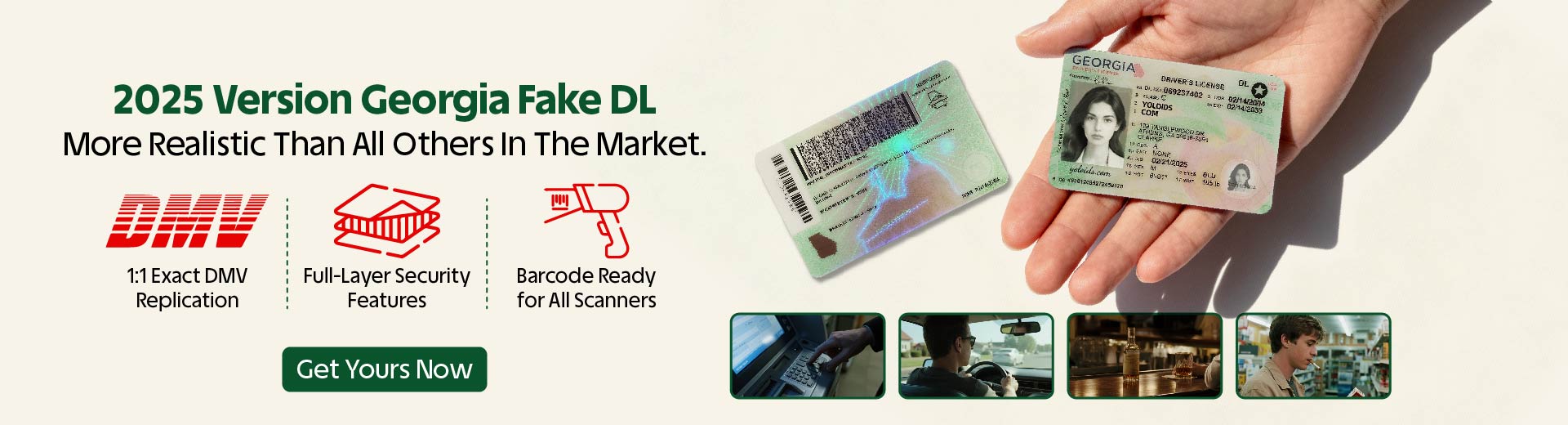
Get your scannable IDs from here!

Our powerful technology instantly scans the barcode on any US driver’s license, extracting and validating data with pinpoint accuracy. Say goodbye to typos, fraudulent documents, and long wait times.

Experience the benefits:

  • Easy-passed Security: Scannable barcode can pass all the KYC verifications easily!
  • Fast Customize:  Easy and fast experience to get an order! Just upload your info and Photo, then we will handle all of them;)
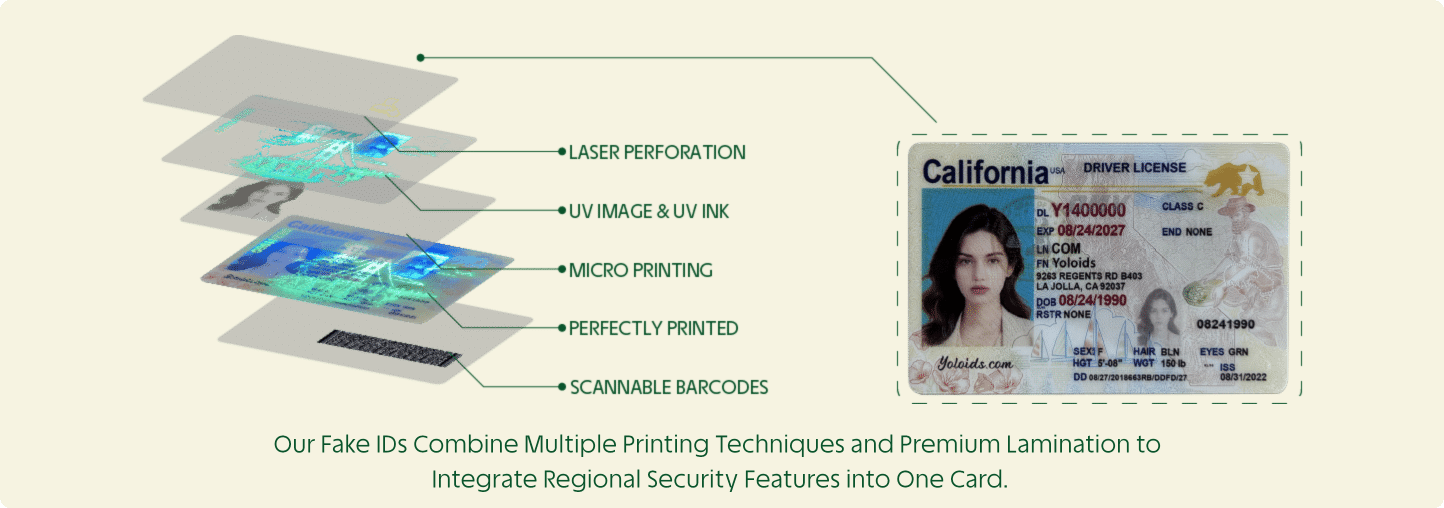
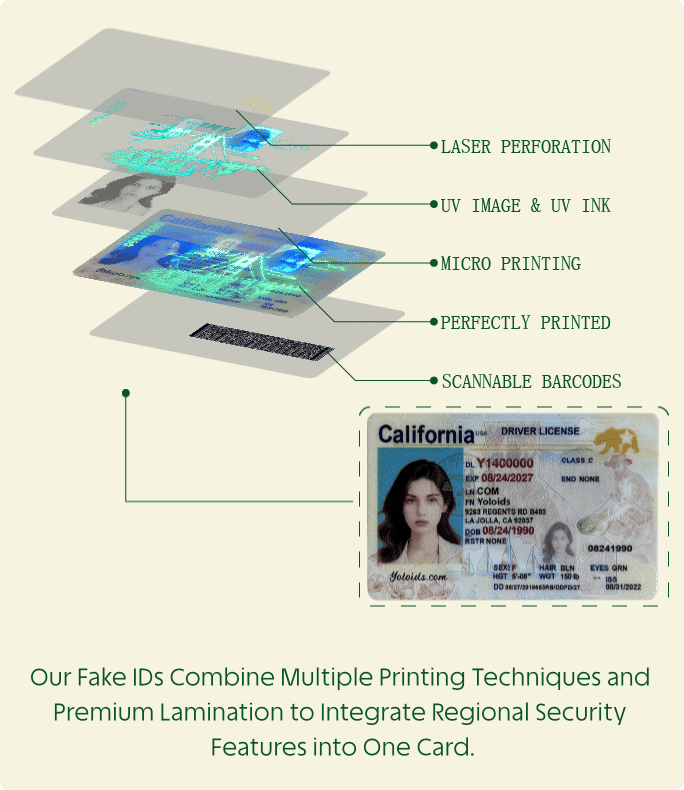
  • 100% Original Material: Our card is laminated and multi-layers, UV light pass,upper print pass!

If you have any questions, please feel free to contact our dedicated customer support team. Thank you for reading!

Related products